
Client Information: Mr. Chen;
Shipping Route: Moving from Wuhan to Melbourne;
Case Summary: Mr. Chen from Wuhan moved to Melbourne, Australia by sea freight.
As one of Australia's well-known cities, Melbourne is a sought-after destination for immigrants, attracting numerous overseas residents with its high quality of life, livable environment, and abundant job opportunities. After obtaining his Australian visa, Mr. Chen from Wuhan chose to settle in Melbourne. Driven by emotional ties and the desire to save costs, he decided to ship his furniture and belongings from China to Melbourne for continued use.
In the early stage of his move, Mr. Chen went through an on-site assessment and measurement, received a quotation and moving plan, and then signed a contract to officially begin the relocation. In international moving, sea freight is the most common method. This is because sea freight offers high cost-effectiveness—it is significantly cheaper than air freight, and cargo ships and containers provide ample space for shipping goods. The only downside is that it takes longer, but the timeframe is still within an acceptable range.
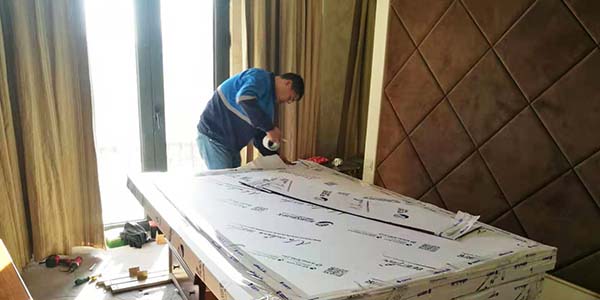
After signing the contract, an on-site packing date will be scheduled. The on-site packing service provided by a professional moving company is not just simple packing—a professional supervisor will lead a team of well-trained packers to provide the service. Before packing, they will inspect the walls and floors along the packing route with Mr. Chen and protect these areas before carefully packing each item according to packing standards. Before the items leave the premises, they will be counted together with Mr. Chen, and a company-stamped receipt will be provided based on the item count. After the moving is completed, all debris and packaging waste will be cleared away. Throughout the entire on-site packing process, Mr. Chen needed to do nothing but watch the team at work. Below are photos from the packing day:
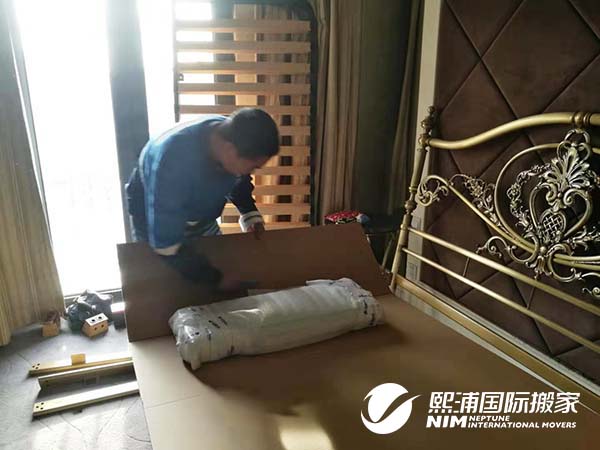
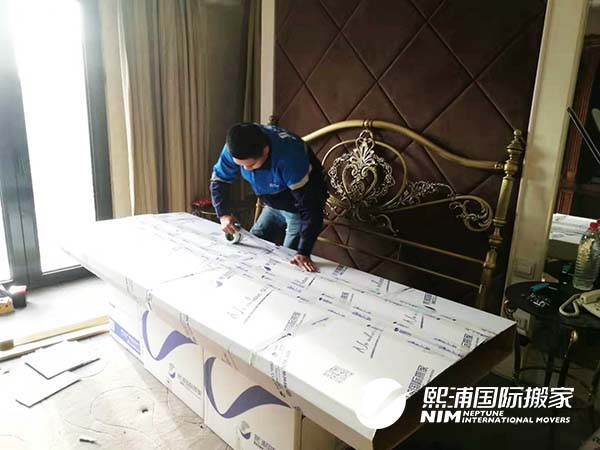
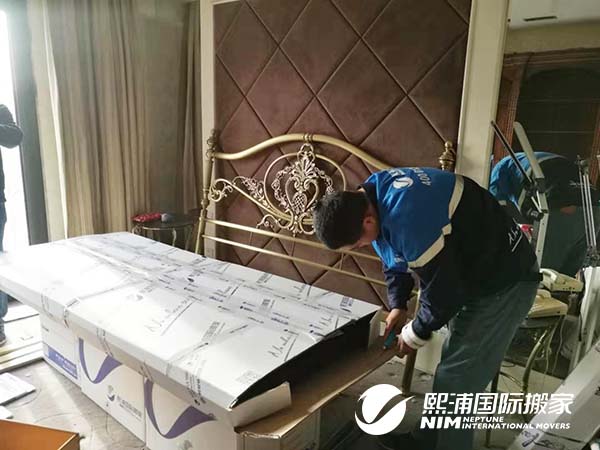
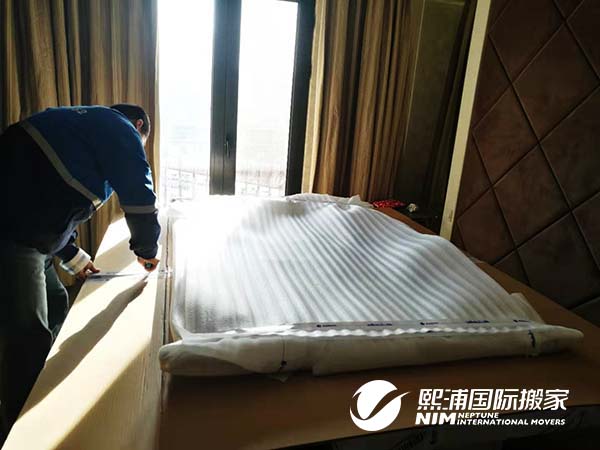
After packing is completed, the items are transported to Seapoe's warehouse for further reinforcement and packing, followed by booking and customs declaration, and then shipped to Australia by sea. After customs clearance in Australia, the items are delivered to the doorstep. Delivery is not merely dropping items at the home—after arrival, each item is placed in the designated position according to Mr. Chen's requirements, the outer packaging of large furniture is removed, debris is cleared away, and simple essential furniture is assembled.
For many first-time movers, cost is a major concern. So what are the costs involved in moving from China to Australia by sea? Taking sea freight as an example, the shipping costs can generally be broken down into the following aspects:
1. Packing process. To avoid severe damage to goods during transportation and to meet customs clearance requirements, furniture and other items need to be carefully packed by a professional packing team before moving. Materials include cardboard, cartons, pearl cotton, bubble wrap, stretch film, edge protectors, tape, and various other materials, along with the corresponding packing and labor costs—all included in the fee.
2. Transportation process. After packing, the moving company's packing team will transport the packed furniture, appliances, and other personal items to a local warehouse or the designated warehouse at the nearest port city. This inland transportation cost is also included.
3. Customs declaration process. Before loading onto the vessel, goods must go through customs declaration procedures and pass customs inspection before they can be loaded. This process incurs a series of related fees. If the items require fumigation according to the destination country's requirements, fumigation-related fees will also apply.
4. Port miscellaneous fees. At the port of departure, goods will incur port handling, documentation, and other miscellaneous charges. During transportation, the shipping company charges the corresponding ocean freight. Upon arrival at the destination port, corresponding port miscellaneous fees will also apply.
5. Customs clearance process. After the goods arrive at the destination port, customs clearance procedures are carried out—that is, declaration to the destination country's customs. Only after obtaining permission from the destination customs can further arrangements be made. The customs clearance procedures will also incur corresponding fees.
6. Delivery process. After customs clearance is completed, delivery service will be provided. This varies slightly according to each client's requirements but generally includes placing all furniture in designated rooms, removing outer packaging, simple furniture assembly, and finally clearing away all packaging debris before leaving.
In summary, international moving costs mainly include origin costs, ocean freight, and destination costs. Origin costs include on-site packing fees, local/inland transportation fees, customs declaration fees, port miscellaneous fees (possible fumigation, inspection, etc. at the port), and ocean freight, which fluctuates. Destination costs include customs clearance fees, port fees, and door-to-door delivery, unpacking, and placement fees.
By now you should understand that because the sea freight moving process involves many steps, each step incurs corresponding costs—some are fixed, while others change dynamically based on market conditions. Therefore, the best approach is to consult a reliable moving company and leave the rest to them.
By quote form, phone, email or WeChat — we reply promptly Get a Quote